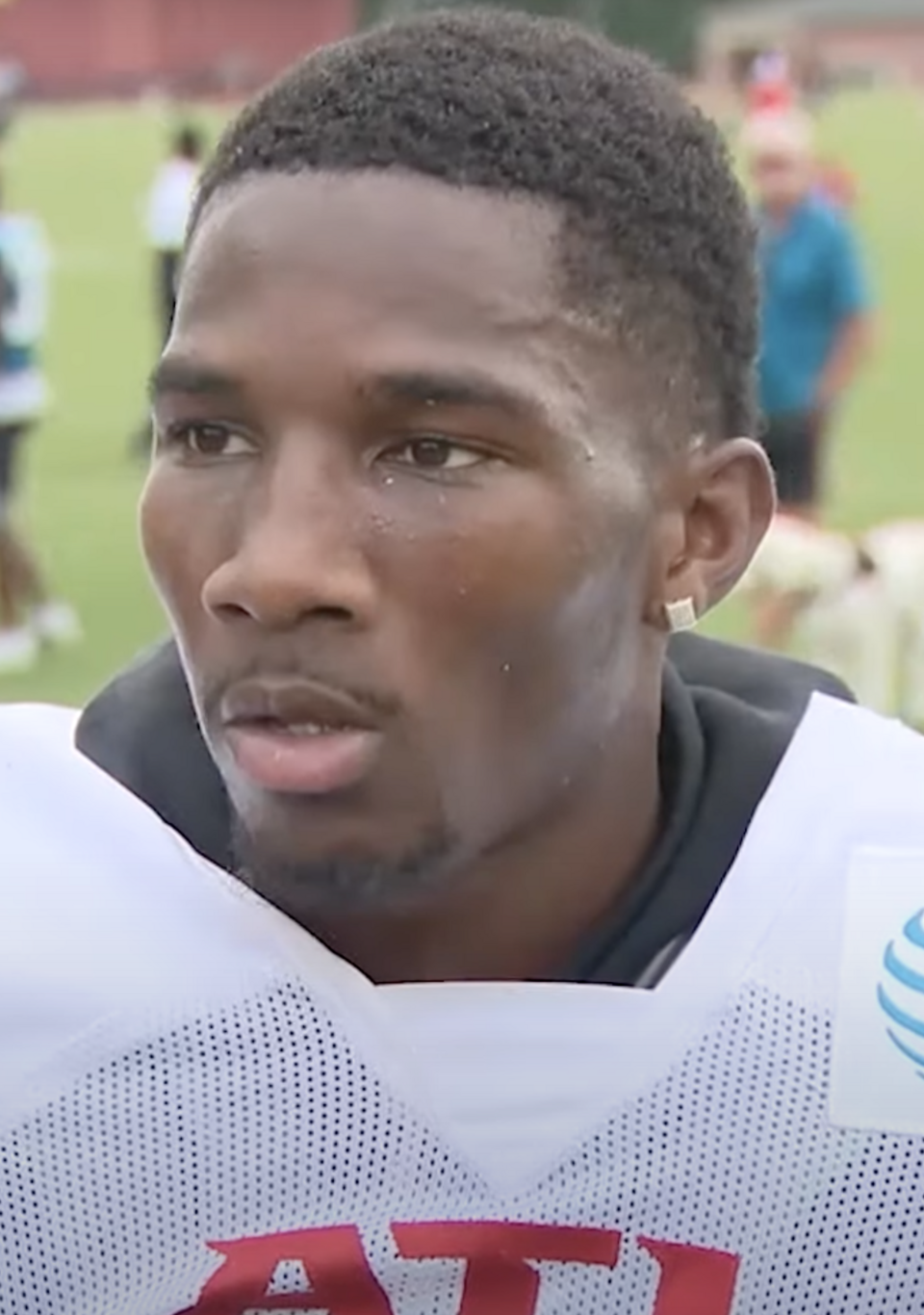
Dee Alford's 40 Time: Does Speed Matter for His Game?
In the high-stakes world of professional football, few metrics capture the imagination and ignite debate quite like the 40-yard dash. It’s a sprint, a raw measure of straight-line speed that can seemingly make or break a prospect's draft stock. For a player like Dee Alford, an undrafted success story who has carved out a significant role in the NFL, his Dee Alford's official 40-yard dash time becomes a fascinating point of discussion. Did his speed, or perceived lack thereof, hold him back? More importantly, does his Dee Alford 40 time truly reflect his effectiveness on the field, particularly as a versatile defensive back?
This article delves deep into the significance of the 40-yard dash for cornerbacks, explores Dee Alford's specific performance in this drill, and ultimately analyzes how his unique skill set allows him to excel beyond the stopwatch. We'll uncover why, for certain players, functional football speed, instincts, and technique often outweigh pure timed speed.
Unpacking Dee Alford's 40-Yard Dash Performance
When Dee Alford declared for the NFL Draft out of Appalachian State, scouts and analysts meticulously reviewed his athletic profile, including his 40-yard dash. While official NFL Combine results are often the gold standard, many players, especially those from smaller schools or those who go undrafted, showcase their abilities at Pro Days. For a detailed breakdown of Dee Alford's Official 40-Yard Dash Time Revealed, including specific splits and expert analysis, it's essential to understand the context of his recorded speed.
Reports from his Pro Day indicated that Alford posted a 40-yard dash time in the mid-4.5 second range, often cited around 4.54 to 4.58 seconds. For a cornerback, this number typically falls into the "average" to "above average" category, but not "elite." Elite speed for a cornerback is often considered sub-4.40 or even sub-4.35 seconds. This perception of his straight-line speed undoubtedly played a role in him going undrafted, as teams often prioritize pure athleticism and upside in the later rounds.
However, the 40-yard dash is just one piece of the puzzle. While it provides a baseline for a player's raw acceleration and top-end speed, it doesn't account for other critical athletic attributes like change of direction, short-area quickness, or burst. It also completely omits the mental aspect of the game – instincts, football IQ, and play recognition – which are arguably more vital for a defensive back's success. This is where Alford truly begins to distinguish himself from mere numbers on a scouting report.
The 40-Yard Dash: A Closer Look at its Role in Evaluating Cornerbacks
The 40-yard dash is a straightforward test: how quickly can a player run 40 yards in a straight line? For cornerbacks, the allure of this drill is understandable. In an era of explosive offenses and dynamic wide receivers, the ability to cover deep routes, close on plays, and recover quickly after being beaten is paramount. A blazing 40 time suggests a player possesses the raw speed necessary to keep pace with the league's fastest pass-catchers.
Why is it important?
- Deep Coverage: Faster corners can run stride-for-stride with receivers on go routes and deep posts, preventing big plays.
- Recovery Speed: If a corner is initially beaten, elite speed can help them close the gap and break up a pass.
- Closing Speed: On shorter routes or run plays, a quick burst can allow a corner to close on the ball carrier or receiver to make a tackle or defend a pass.
However, relying solely on the 40-yard dash to evaluate a cornerback is akin to judging a book by its cover. The game of football, especially for defensive backs, is rarely a straight line. Cornerbacks must constantly change direction, accelerate from a standstill, backpedal, transition, and break on the ball. These attributes are better measured by drills like the short shuttle, 3-cone drill, and broad jump, which test agility, quickness, and explosive power in confined spaces.
Furthermore, the 40-yard dash tells us nothing about a player's football instincts, their ability to read a quarterback, anticipate routes, or their willingness to tackle. Many players with "average" 40 times have carved out successful NFL careers because they excel in these less quantifiable, but equally crucial, areas. To see How Dee Alford's 40 Time Compares to Other CBs across the league, offering a broader perspective on cornerback athleticism, explore our comparative analysis.
How Dee Alford's Game Thrives Beyond Raw Speed
Dee Alford’s journey to becoming a key contributor for the Atlanta Falcons is a testament to the idea that true football speed and effectiveness transcend a stopwatch. While his Dee Alford 40 time might not be in the elite tier, his game is built on a foundation of critical skills that consistently put him in a position to succeed.
Instincts and Football IQ
Perhaps Alford's most outstanding trait is his exceptional football intelligence. He consistently demonstrates a keen ability to read opposing offenses, anticipate routes, and diagnose plays before they fully develop. This mental processing speed allows him to be a step ahead, compensating for any perceived deficit in raw straight-line speed. He understands leverage, spacing, and receiver tendencies, enabling him to break on the ball with precision and disrupt passing lanes effectively.
Quickness and Agility
While his 40-time measures linear speed, Alford possesses elite short-area quickness and change-of-direction ability. These attributes are far more critical for a nickel cornerback, a position he often plays, where he must navigate tight spaces, mirror shifty slot receivers, and react instantly to multiple route combinations. His ability to explode out of his backpedal and drive on the ball is top-tier, allowing him to challenge passes that might be out of reach for a less agile player.
Tackling and Run Support
Alford is a physical and willing tackler, a non-negotiable trait for any defensive back, especially those playing closer to the line of scrimmage. He's not afraid to mix it up in run support, shedding blocks and making sound tackles to limit yards after catch or prevent big gains on the ground. This physicality adds another dimension to his game, making him a reliable and versatile piece of the defense.
Ball Skills and Competitiveness
Despite not always having a size advantage, Alford displays excellent ball skills. He has a knack for finding the football, whether it's by deflecting passes or securing interceptions. This is a direct result of his anticipation, body control, and aggressive playmaking mentality. His competitiveness, forged through an undrafted journey, shines through in every snap, inspiring his teammates and making him a relentless force on the field.
In essence, Alford's functional speed – how quickly he processes information and reacts – is far more impactful than his raw timed speed. He understands the geometry of the field and uses his mental acumen to put himself in advantageous positions, effectively making him "faster" in live game action than his 40-yard dash might suggest.
Practical Implications for Scouts and Fans: What to Really Look For
The case of Dee Alford offers valuable lessons for both NFL scouts and passionate football fans on how to truly evaluate talent, especially in the secondary. It underscores the limitations of relying too heavily on single athletic metrics and highlights the importance of a holistic approach.
For Scouts: Beyond the Stopwatch
- Game Tape is King: While combine numbers provide a baseline, there is no substitute for evaluating a player's performance in actual game situations. How do they react to adversity? Do they make plays when it matters? Are their instincts evident on film?
- Functional vs. Raw Speed: Scouts should prioritize functional speed – a player's ability to consistently play fast on the field, react quickly, and change direction – over just raw straight-line speed. Many players with average 40 times possess superior functional speed due to their agility, anticipation, and quick twitch.
- Position-Specific Drills: Pay close attention to drills that mimic game movements for cornerbacks, such as the 3-cone drill and short shuttle. These drills reveal much more about a CB's ability to mirror receivers and break on the ball.
- Intangibles: Evaluate football IQ, competitiveness, leadership, and coachability. These traits often determine a player's longevity and success more than any single athletic measurement.
For Fans: Appreciating Diverse Skill Sets
- Look Beyond the Headlines: Don't get solely caught up in the flashy 40-times during the combine. Understand that many invaluable players aren't necessarily the fastest in a straight line.
- Observe Play Recognition: Watch how defensive backs diagnose plays. Do they jump routes? Are they consistently in good position? This often indicates high football IQ.
- Appreciate Tackling and Fundamentals: A strong tackler who is fundamentally sound in coverage is often more valuable than a pure speedster who misses tackles or lacks awareness.
- Versatility is Key: Players who can play multiple positions (nickel, outside, safety, special teams) offer immense value, regardless of their 40-yard dash.
Dee Alford exemplifies the player who might not wow you with his official 40-yard dash time but consistently impresses with his on-field impact. His success is a powerful reminder that the best football players are often those who combine physical tools with exceptional mental processing and a relentless drive.
Conclusion
The fascination with the 40-yard dash in football is undeniable, and for good reason – speed is a critical component of the game. However, as Dee Alford's career vividly demonstrates, raw straight-line speed is just one piece of a much larger, more intricate puzzle. While his Dee Alford 40 time might have been a contributing factor to him going undrafted, it has not defined his NFL journey. Instead, his success is built on a foundation of elite instincts, short-area quickness, exceptional ball skills, and a competitive drive that allows him to consistently make plays.
Alford's performance serves as a powerful reminder that evaluating football talent requires a nuanced approach, looking beyond simple metrics to appreciate the functional speed, intelligence, and technique that truly separate good players from great ones. For defensive backs like Alford, the ability to anticipate, react, and adapt in real-time far outweighs the milliseconds shaved off a sprint. In the end, what truly matters is how effectively a player performs on the gridiron, and by that measure, Dee Alford's game speaks volumes.